Explore all experiences
Life Transitions

Comfort and Presence Near the End of Life

End-of-life care belongs within a larger network of family, hospice, medical, spiritual, and community support. When appropriate, gentle touch may contribute comfort, orientation, and human presence while following the person's energy, consent, and care plan.

Primary PATH
Hold
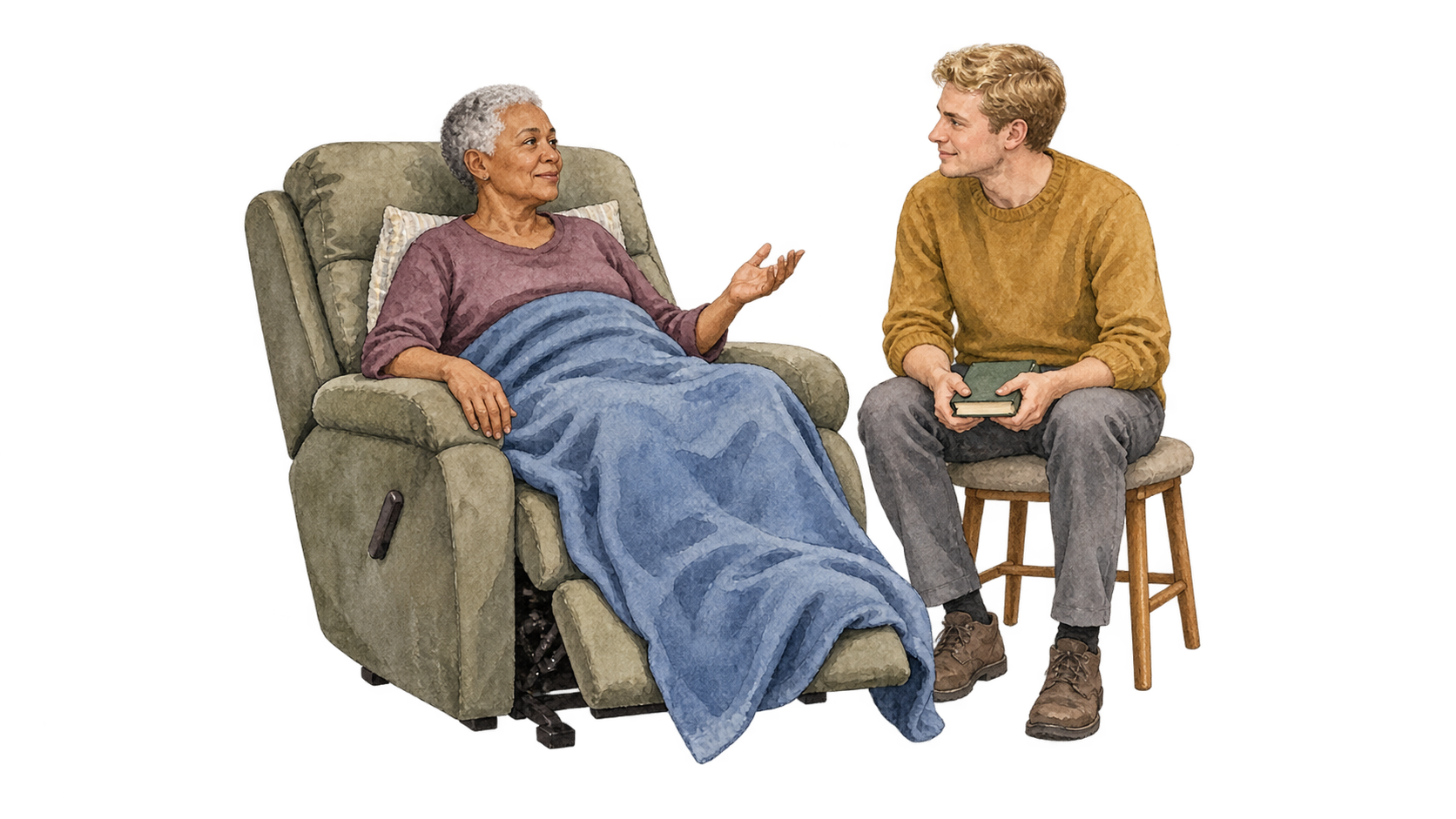
An adult resting in a recliner gestures toward a seated companion holding a closed book.
Understanding

Understanding this experience

End-of-life support can change the felt shape of ordinary life. The body may register uncertainty, responsibility, memory, or meaning before those experiences are easy to explain.

Gentle, comfort-centered presence within the broader experience of approaching life's end.

Recognition

You may recognize some of this.

  • Comfort matters more than a treatment goal
  • Energy and communication may change from day to day
  • Care needs to follow the person's pace and broader plan
Ways to begin

Sessions to explore

A few ways to begin. Your session can be adapted around what matters to you.

Related techniques

Techniques that may support this care

Our approach

Care shaped around you

With end-of-life support, the practitioner offers steadiness without becoming the author of the experience. Touch, quiet, conversation, and pacing are shaped around what supports presence and agency today.

Possibility

How bodywork may help

Bodywork may offer continuity and grounded attention while familiar roles or circumstances are changing. It does not resolve the transition; it can provide a place to notice what your body needs within it.

Together

What we might explore

  • What feels stable while other parts of life are changing
  • How uncertainty, responsibility, or meaning shows up physically
  • The kind of presence or support that fits this season
Before we begin

Important considerations

Any touch must align with the person's wishes, energy, medical status, hospice plan, and the guidance of the broader care team.