Supportive Practice

Post-Surgical Bodywork

Massage adapted to healing stage, surgical area, medical guidance, and the person’s current tolerance after a procedure.

Careful bodywork after surgery, paced by healing status and coordinated when needed with the medical team.

Browse all techniques

One tool within an individualized session.

What Post-Surgical Bodywork Is

Post-surgical bodywork is an umbrella term for massage adapted after an operation. It may address general comfort, positioning, movement, or fully healed tissue, but the appropriate approach depends on the procedure, healing stage, complications, and surgeon’s guidance.

The approach is adapted to the person and context rather than applied as a fixed formula.

From technique to session

Sessions to explore

A few ways this approach could fit your care. These sessions are starting points, and techniques can be considered across any session. Together, we choose what fits your preferences, your needs that day, and your practitioner’s training.

Tend botanical illustration for Post-Surgical Support

Tend

Post-Surgical Support

Supportive bodywork shaped around surgical recovery, with attention to comfortable positioning, sensitive areas, postoperative guidance, and the practitioner’s training for any specialized work.

$150

60 min

$225

90 min

$300

120 min

$450

180 min

A closer look

Receiving this approach.

How it may be used

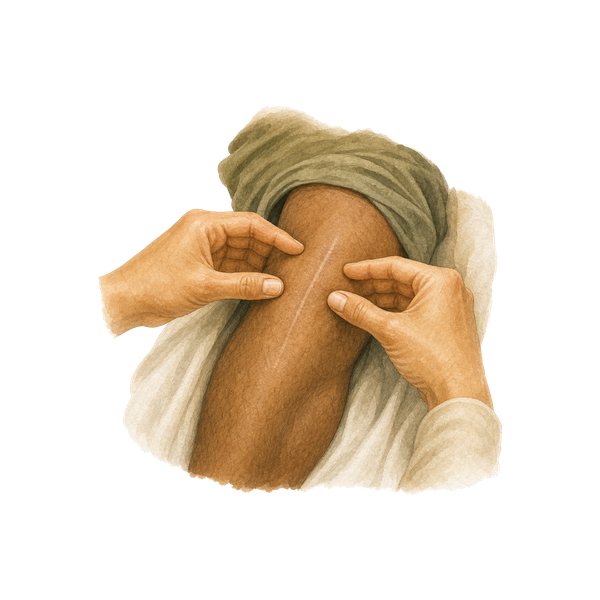
Early work may avoid the surgical area entirely. Later, and only when tissue is closed and medically appropriate, a trained practitioner may use gentle contact near or around healed areas and adapt pressure, duration, and position.

The pace, pressure, position, and duration are adjusted through ongoing consent and feedback.

What to expect

Sessions are typically conservative and may use extra bolstering, shorter duration, or work away from the surgical site. Tenderness, fatigue, and tolerance can change from day to day.

The work can be paused, changed, or stopped at any time.

Who it may support

Massage may be considered as supportive care during recovery, but it does not accelerate healing, prevent complications, dissolve adhesions, or replace physical therapy and medical follow-up.

Responses vary. This information is educational and does not replace medical assessment or care.

Thoughtful care

Care, context & considerations.

Safety & When to Pause

Massage is not performed over an open wound, active infection, new redness or drainage, unexplained swelling, suspected blood clot, fever, or an unstable surgical area. Medical clearance and procedure-specific training may be needed, especially after cancer treatment, abdominal or chest surgery, joint replacement, or complications.

When symptoms are new, severe, unexplained, or changing quickly, medical evaluation comes before massage.

Scope & Evidence

This page is educational and does not diagnose, treat, or replace medical care. Research and individual responses vary across manual therapy approaches.

Wild Hart uses this technique only within current training, legal scope, informed consent, and the needs of the session.