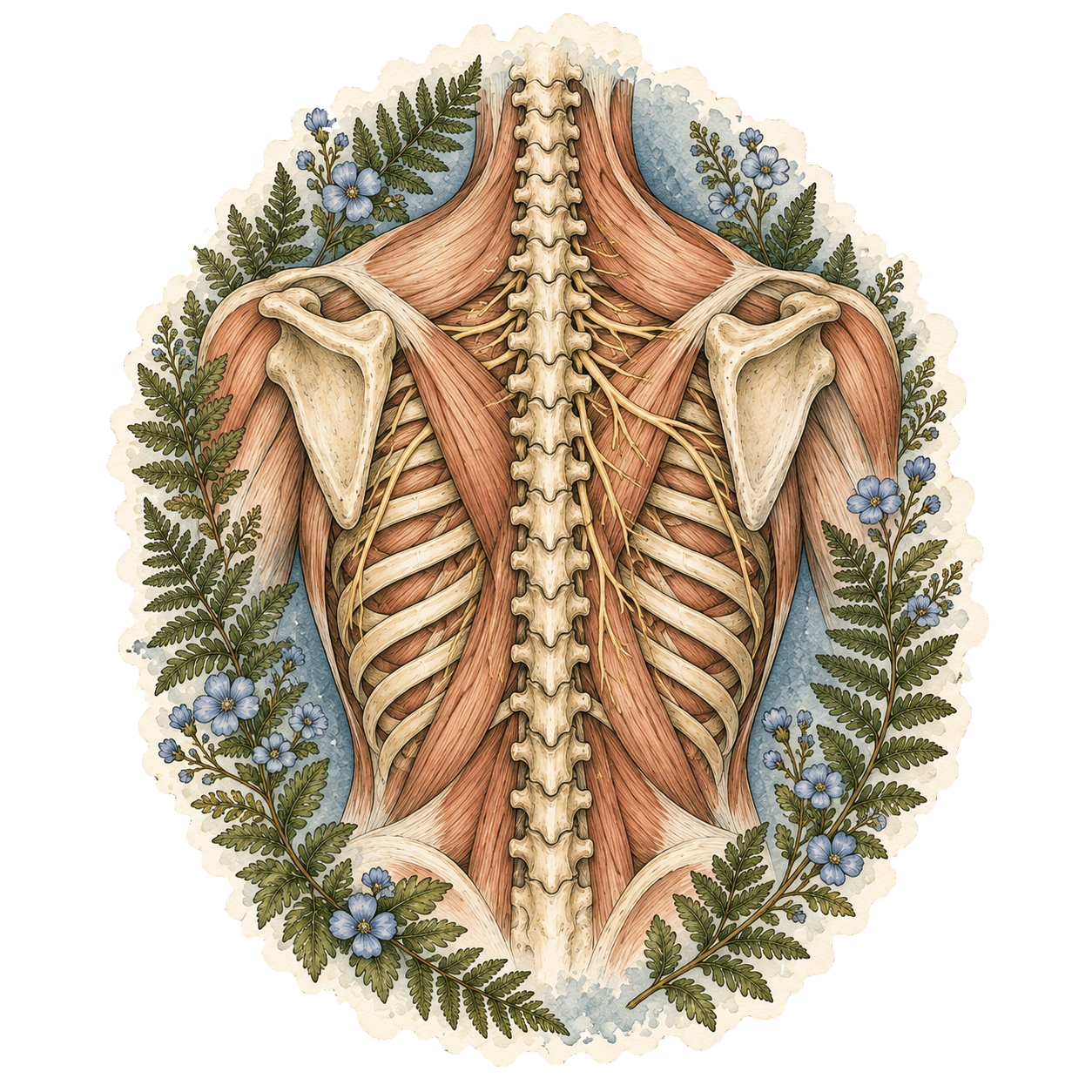
Watercolor and ink illustration of the spine, ribs, and back muscles framed by ferns and blue flowers.

A session shaped around the person, not a protocol.

Clinical & Therapeutic Bodywork

Persistent Pain Support

Adaptable bodywork for ongoing or recurring pain, with pressure, positioning, and pace shaped around how you feel today and what you have learned about yourself.

About this session

Adaptable bodywork for someone living with ongoing or recurring pain. The session makes room for changing symptoms, variable tolerance for touch, and the person’s knowledge of their own experience. Work can be focused or broad, with pressure, positioning, and pacing adjusted along the way. Across visits, the practitioner and client can use feedback to make more informed choices about what to include.

Options for your session

Ways to shape this session.

These are possibilities, not a preset. Choose clothing, draping, and every other preference on the day, based on your comfort. You can change your mind at any point; we’ll discuss how your choices shape the session.

Every session is gender affirming. Trans, nonbinary, and gender-expansive people are welcome with every practitioner. We respect your name, pronouns, and the language you use for your body; you decide what you want to share.

Clothing
Clothed · Mostly clothed · No clothing
Draping
Traditional · Minimal · Extra coverage
Touch
Still · Flowing · Rhythmic · Focused
Pressure
Light · Moderate · Firm
Positioning
Lying with support · Seated with support
Conversation
Mostly quiet · Some conversation · Conversation welcome

Clothing is what stays on your body; draping is how sheets or blankets provide coverage. Mostly clothed means keeping most clothing on while allowing access to a specific area. No clothing still includes the draping we agree on.

Who this is for

  • Their pain varies from day to day, making a fixed massage routine feel poorly suited to their needs.
  • Several areas are uncomfortable and they want help deciding what feels manageable to address that day.
  • They want a practitioner who welcomes feedback and can adapt the work based on how previous sessions felt afterward.

What we may explore

  • What feels manageable to address on the day of your session.
  • Your preferences when symptoms or tolerance for touch change.
  • What you noticed after previous visits and would like considered this time.

What the session may include

  • Focused attention in a particular area or broader bodywork across several areas.
  • Adjustments to pressure, positioning, and pace as the session progresses.
  • Conversation and feedback to help choose what to include.

What to expect

Your knowledge of your own experience is part of the planning. We start with how you feel that day, decide what seems manageable, and adapt along the way. Across visits, your feedback about the time after a session can inform the next one.