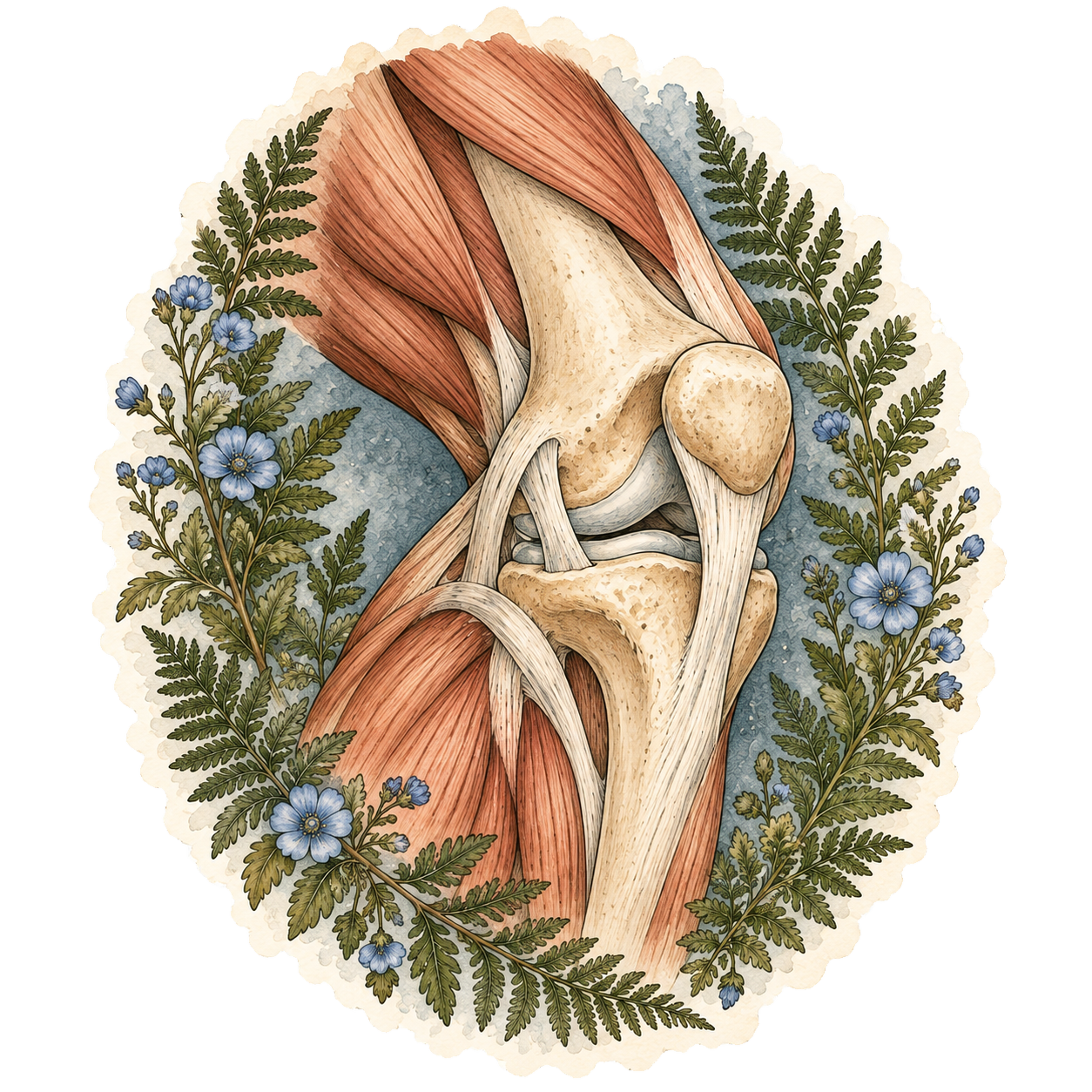
Watercolor and ink illustration of a knee joint, supporting tendons, and leg muscles framed by ferns and blue flowers.

A session shaped around the person, not a protocol.

Clinical & Therapeutic Bodywork

Injury Recovery Support

Bodywork adapted to your stage of injury recovery, with attention to current limitations, surrounding areas, and the demands of returning to activities that matter to you.

About this session

Bodywork organized around an injury and the person’s current stage of recovery. The session considers the affected area, surrounding areas carrying additional demands, and any relevant restrictions or care guidance. Attention may shift as activity and comfort change. The aim is to provide appropriate, responsive bodywork within the wider recovery process.

Options for your session

Ways to shape this session.

These are possibilities, not a preset. Choose clothing, draping, and every other preference on the day, based on your comfort. You can change your mind at any point; we’ll discuss how your choices shape the session.

Every session is gender affirming. Trans, nonbinary, and gender-expansive people are welcome with every practitioner. We respect your name, pronouns, and the language you use for your body; you decide what you want to share.

Clothing
Clothed · Mostly clothed · No clothing
Draping
Traditional · Minimal · Extra coverage
Touch
Focused work · Broad contact · Still contact
Movement
Resting · Gentle movement
Positioning
Lying with support · Seated with support
Conversation
Mostly quiet · Some conversation · Conversation welcome

Clothing is what stays on your body; draping is how sheets or blankets provide coverage. Mostly clothed means keeping most clothing on while allowing access to a specific area. No clothing still includes the draping we agree on.

We’ll choose from these options around your stage of recovery, current comfort, and any relevant care guidance.

Who this is for

  • They are recovering from an injury and want a massage adapted to their current limitations.
  • Changes in movement or activity have left surrounding areas feeling overworked.
  • They are returning to work, exercise, or another activity and want bodywork that can evolve alongside that process.

What we may explore

  • Your current concerns and limitations as you recover from an injury.
  • Nearby areas that have been carrying additional demands.
  • How changes in activity and comfort may shape the focus of your session.

What the session may include

  • Bodywork organized around your current stage of recovery.
  • Attention to the affected area or surrounding areas, as appropriate.
  • Adjustments that account for relevant restrictions and care guidance.

What to expect

We consider your injury, current comfort, and any relevant restrictions or care guidance before choosing the focus. Attention can shift as your activity changes, keeping the bodywork responsive to where you are in the recovery process.