
Manual Therapy

Intraoral Massage

A specialized technique addressing jaw tension through gentle, consent-based work inside the mouth.

A specialized technique addressing the jaw and surrounding structures through work inside the mouth.

Browse all techniques
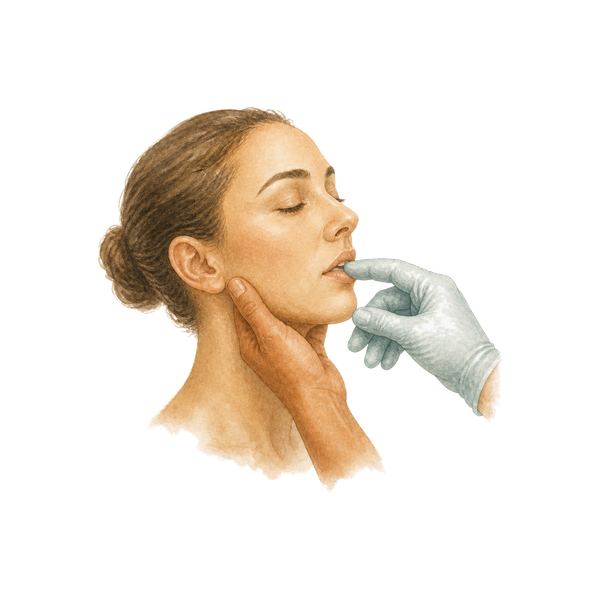
Massage therapist wearing medical gloves providing gentle intraoral massage in a calm studio.

One tool within an individualized session.

What Is Intraoral Massage?

Intraoral massage involves working with muscles inside the mouth that contribute to jaw movement, facial tension, and overall head and neck function. These muscles are difficult to access externally and often hold significant, unconscious tension.

The technique is commonly used in therapeutic settings to complement work on the jaw, neck, shoulders, and upper back. While precise, intraoral massage is typically gentle and focused on awareness and release rather than forceful manipulation.

From technique to session

Sessions to explore

A few ways this approach could fit your care. These sessions are starting points, and techniques can be considered across any session. Together, we choose what fits your preferences, your needs that day, and your practitioner’s training.

Watercolor illustration of the skull, jaw joint, and neck among blue flowers

Tend

Targeted Jaw & TMJ Care

Detailed bodywork for jaw tension, clenching, and TMJ-related discomfort. External work can be the whole session; intraoral work is an optional choice.

$150

60 min

$225

90 min

A closer look

Receiving this approach.

How it may be used

Intraoral massage is not offered as a standalone or isolated service. Instead, it may be integrated into a massage session when appropriate, based on goals, comfort level, and practitioner assessment.

The work is always discussed in advance. Clear consent is established, gloves are used, and clients are free to pause or stop the technique at any time. Intraoral work is typically brief and paired with external work to support integration across the jaw, neck, shoulders, and nervous system.

What to expect

If intraoral techniques are included, they are introduced gradually and with ongoing communication. The work is typically brief and focused, using light to moderate pressure. Sensations may feel unfamiliar at first, but the pace remains slow and responsive.

Clients are guided through breathing and awareness as needed, and the technique is discontinued immediately if discomfort arises. External integration work helps the body absorb and respond to the changes.

Who it may support

Intraoral massage techniques may be helpful for people experiencing jaw tension or clenching, TMJ-related discomfort or restriction, facial tension connected to stress, or neck and shoulder tension linked to jaw holding.

Use of the technique is always optional and individualized.

Thoughtful care

Care, context & considerations.

Safety & When to Pause

Intraoral work is avoided with active oral infection, open sores, acute dental pain, uncontrolled bleeding, recent oral surgery without clearance, or symptoms that need dental or medical evaluation. Clean gloves and appropriate hygiene are required. The client may stop the work immediately at any time.

When symptoms are new, severe, unexplained, or changing quickly, medical evaluation comes before massage.

Scope & Evidence

Intraoral massage is massage therapy, not dental care and not a diagnosis or treatment for temporomandibular joint disorders. It is used only within verified training, legal scope, informed consent, and infection-control requirements.

Wild Hart uses this technique only within current training, legal scope, informed consent, and the needs of the session.