
Supportive Practice

Ayurvedic Massage

An oil-based massage approach informed by Ayurvedic traditions, with rhythmic contact and attentive pacing.

A traditional bodywork approach rooted in rhythm, oil application, and attentive pacing.

Browse all techniques
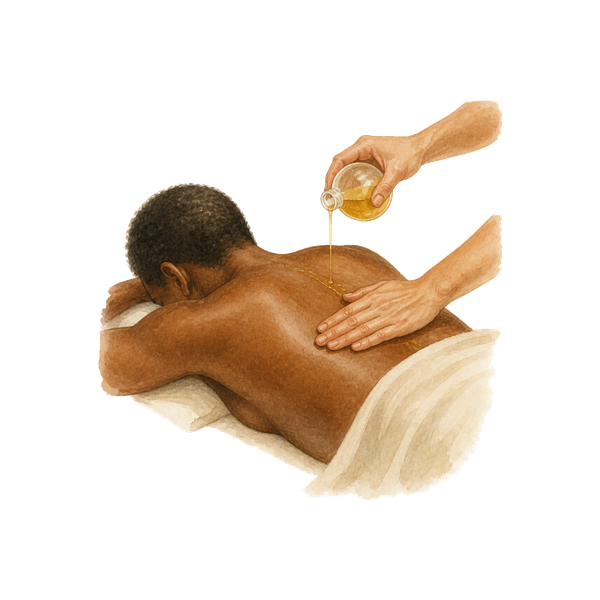
Massage therapist applying warm oil during an Ayurvedic massage in a calm studio setting.

One tool within an individualized session.

What is Ayurvedic-inspired massage?

Ayurvedic massage includes diverse traditions and contemporary approaches. Oil application, flowing contact, and deliberate rhythm may be part of the work.

Preferences around oil, warmth, pressure, and pacing belong in the conversation. Wild Hart presents the work as massage rather than Ayurvedic medical diagnosis or treatment.


From technique to session

Sessions to explore

A few ways this approach could fit your care. These sessions are starting points, and techniques can be considered across any session. Together, we choose what fits your preferences, your needs that day, and your practitioner’s training.

Pause botanical illustration for Restorative Flow

Pause

Restorative Flow

An unhurried, flowing massage with broad contact and connected strokes. Pressure and pace are shaped around you, with oil or lotion supporting a continuous, restful experience.

$150

60 min

$225

90 min

$300

120 min

$450

180 min

Attune botanical illustration for The Receiving Session

Attune

The Receiving Session

An unhurried, flowing session centered on receiving care and attention. Make room for what you enjoy, without feeling responsible for conversation or anyone else’s comfort.

$225

90 min

$300

120 min

$450

180 min

Pause botanical illustration for Head, Hands & Feet

Pause

Head, Hands, & Feet

Give your favorite areas more time. Focused care for the scalp, face, hands, and feet, with optional neck and shoulder work and most of the body covered.

$150

60 min

$225

90 min

$300

120 min

$450

180 min

A closer look

Receiving this approach.

How it may be used

Sessions may draw from Abhyanga, a flowing, oil-based approach using long, rhythmic strokes to support full-body integration, and Vishesh, a slower, more focused technique that applies deeper pressure where the body is ready for targeted work. These methods are often combined—Abhyanga to ground and warm the system, followed by Vishesh to address areas of persistent tension or restriction.

What to expect

Sessions typically involve the application of warm oil and continuous, intentional contact. Pressure ranges from gentle and flowing to slow and specific, depending on how Abhyanga and Vishesh are used within the session. Communication is encouraged throughout, and time is built in for the body to settle and integrate before transitioning back into your day.

Who it may support

You may be curious about oil-based massage, rhythmic contact, or a slower pace. Those preferences can help shape a conversation about whether the approach fits your session.

The method is adapted to the practitioner, your preferences, and what is appropriate for you.

Thoughtful care

Care, context & considerations.

Safety & When to Pause

Oil-based massage is modified or avoided with fragrance or ingredient sensitivity, active skin conditions, open wounds, acute illness, fever, clotting risk, or recent surgery. Warm oil requires careful temperature checks. Pregnancy and significant medical conditions may call for additional precautions.

When symptoms are new, severe, unexplained, or changing quickly, medical evaluation comes before massage.

Scope & Evidence

Ayurvedic massage has diverse traditional and contemporary lineages. Wild Hart presents it as massage therapy, not as Ayurvedic medical diagnosis or treatment, and does not promise cleansing effects, constitutional change, or specific health outcomes.

Wild Hart uses this technique only within current training, legal scope, informed consent, and the needs of the session.